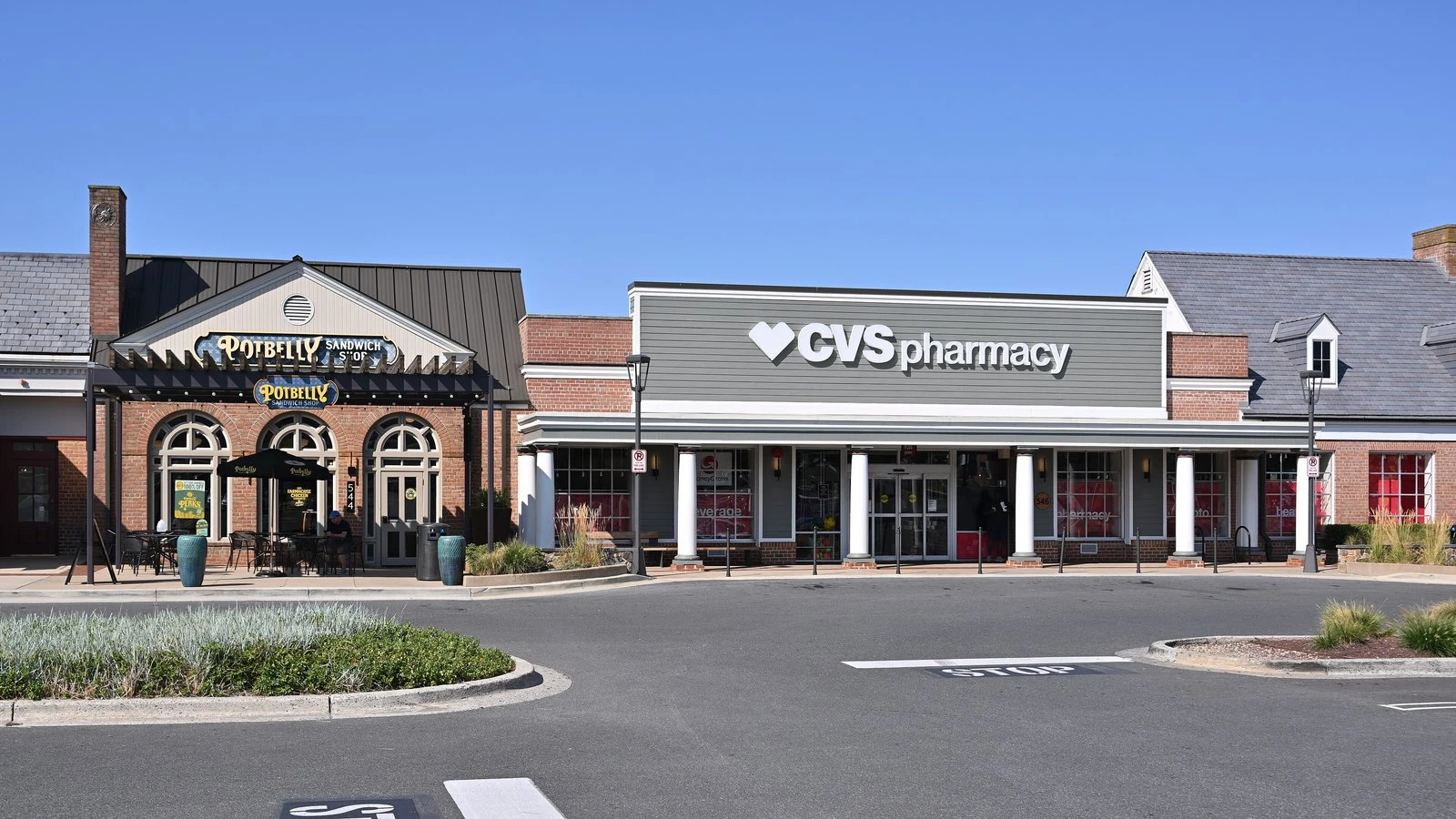
For two decades, owning a CVS-leased building has been one of the cleanest bets in net-lease real estate. The tenant was a healthcare giant, the leases ran long, and the guarantor's credit was investment grade. On Wednesday, CVS Health said it will split into two public companies, putting its roughly 9,000 drugstores into a separate business called CVS Pharmacy. For thousands of landlords, the question is no longer just whether a store stays open. It is which company will stand behind the rent.
The deal in brief
Under the plan announced Nov. 4, the healthcare company, which keeps the CVS Health name for now, will hold Aetna, CVS Caremark, CVS Specialty, Oak Street Health and Signify Health under current CEO David Joyner. The retail company, CVS Pharmacy, will hold the roughly 9,000 pharmacies, the mail pharmacy, MinuteClinic and the Health100 technology business, led by Prem Shah. CVS expects to finish the separation in the first half of 2028. It still needs final board approval, an effective Form 10 registration with the SEC and confirmation that the split is tax-free.
Investors didn't like it. CNBC reported that CVS shares closed more than 12% lower Wednesday, and that the move effectively reverses the $78 billion Aetna acquisition of 2018. Joyner told CNBC the decision came "out of a position of strength," pointing to a recovery in Aetna's Medicare business and solid pharmacy results.
A real estate footprint few tenants can match
CVS's 2025 annual report says the company had about 9,000 retail locations at year-end and leases most of its retail stores, mail-order facilities and primary care centers, typically on initial terms of 15 to 25 years. Only a small share of the stores are owned. InvestmentGrade.com, reading the same filing, puts it at about 4% of more than 7,000 CVS-branded stores, plus about 1,870 pharmacies operating inside other retailers.
The footprint has been shrinking for a while. The 10-K shows CVS opened 87 locations, relocated 5 and closed 243 in 2025. That followed a program that closed about 900 stores from 2022 through 2024. In the net-lease market, InvestmentGrade.com counted 163 CVS-leased properties for sale as of early November, with a median asking price of $4.0 million and a median asking cap rate of 6.45%. Its listings show the typical CVS building at about 12,300 square feet on roughly 1.5 acres.
Credit is the crux
CVS Health's long-term debt is currently rated BBB by S&P (stable), Baa3 by Moody's (positive) and BBB by Fitch (negative), according to InvestmentGrade.com's ratings check. The company says both new companies are expected to have "a solid investment grade rating" at separation. That is a target, not a rating. Until the agencies weigh in and the Form 10 shows how debt and lease obligations will be split, landlords cannot know exactly where their guarantee will land.
There is also a detail that often gets glossed over: the tenant named on a CVS lease is frequently an operating subsidiary, not CVS Health Corporation itself. InvestmentGrade.com advises checking the lease, the guaranty and a tenant estoppel to confirm which entity is liable. That homework now matters more. A lease guaranteed by the parent today could, after the split, be backed by a standalone pharmacy company that is smaller, more exposed to retail pressure and no longer tied to an insurer or a PBM.
What it means for CRE investors and owners
Pull every CVS lease and map the guarantor. Owners should confirm whether the rent is guaranteed by CVS Health Corporation or by a subsidiary, and read the assignment and successor clauses closely. Which company ends up on the hook will shape value more than any headline.
Expect pricing to widen until the credit is clear. In our view, buyers will ask for a premium on CVS paper while the separation is pending, especially on short remaining terms where renewal risk and credit risk stack up. Long-term leases in strong trade areas should hold up best. Weaker stores with flat rent and a few years left will feel it first.
Watch for real estate monetization. A standalone pharmacy company will need its own capital plan, and the roughly 4% of stores CVS owns are an obvious candidate for sale-leasebacks. We think that could bring a new wave of CVS-leased product to market. Buyers should underwrite it on the real estate and the new tenant's credit, not on the old parent's.
Landlords of shopping centers should plan for backfill. The split itself doesn't announce new closures, but CVS has kept trimming its footprint every year. Owners of centers anchored by a CVS should keep a re-tenanting plan ready, with medical, quick-service and discount users as the likeliest replacements for a 10,000- to 13,000-square-foot box.
Sources
CNBC, "CVS to split off drugstore business in major breakup of healthcare giant" (Nov. 4, 2026)
Fierce Healthcare, "CVS Health plans to split pharmacy business from Aetna, Caremark" (Nov. 4, 2026)
CVS Health 2025 Form 10-K (SEC)
InvestmentGrade.com, "CVS Credit Rating & NNN Cap Rate (2026)"
Published by The Basis. Research dates, source references and illustrative assumptions are retained from the original article.