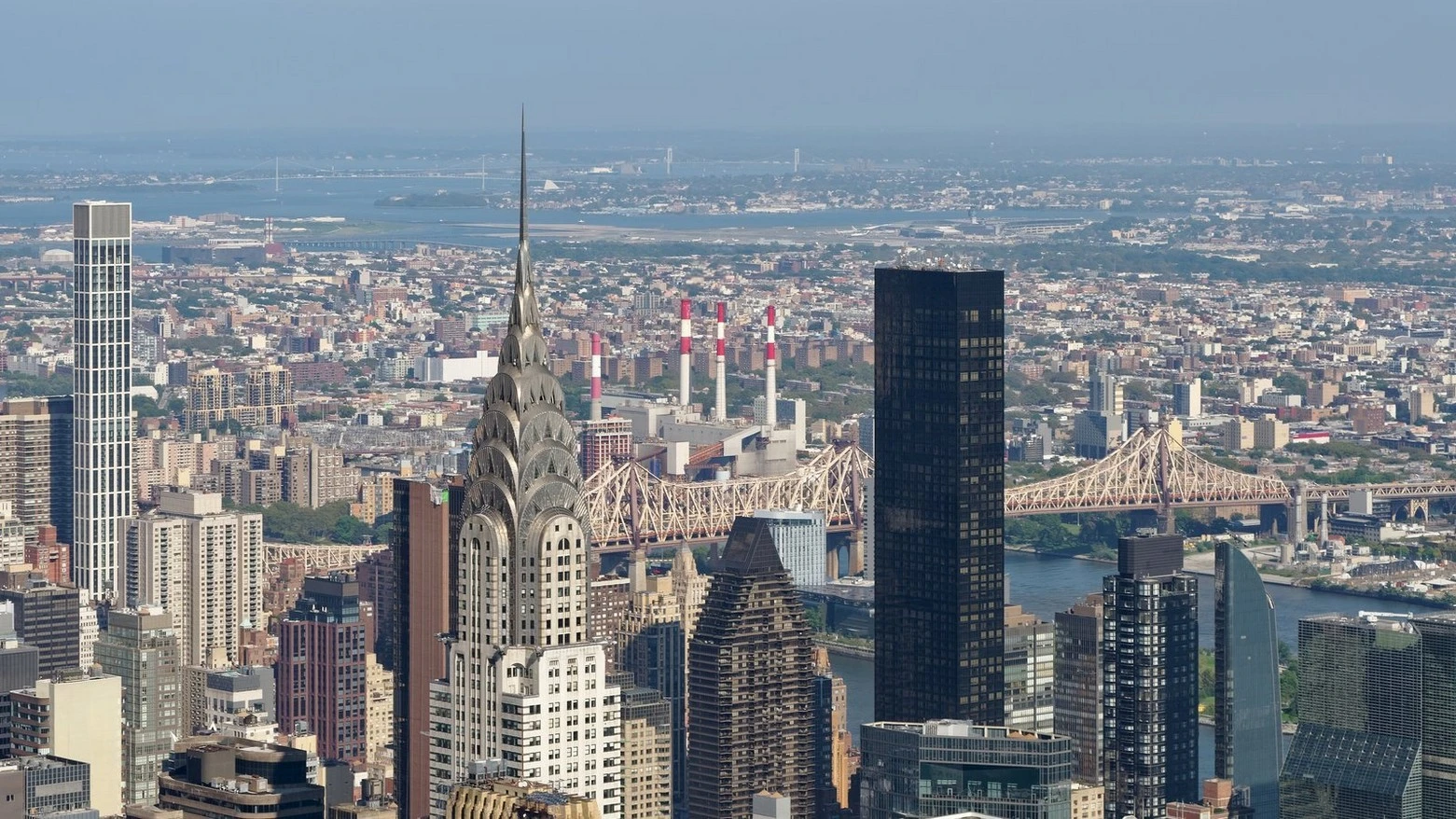

New York City has a tight housing supply, a new rent freeze on its stabilized stock and reports of lenders taking a harder look at regulated buildings. Into that mix, Brightshore Capital just paid just over $143 million for a brand-new apartment building in Long Island City, Queens. The deal shows where investors still see value in New York multifamily: new construction, mostly market-rate units and a neighborhood just across the East River from Midtown Manhattan.
The deal
Brightshore Capital, the $5.6 billion investment firm formerly known as GTIS Partners, bought DŌMI at 29-24 40th Avenue in the Dutch Kills section of Long Island City, Commercial Observer reported on Nov. 2. The sellers were a joint venture of SB Development, Hazelton Capital Group and Avenue Realty Capital. Newmark advised on the sale.
Affinius Capital provided $98.5 million in acquisition financing, also arranged by Newmark. By our math that loan covers roughly 69% of the purchase price, and the price works out to roughly $750,000 per apartment.
What Brightshore bought
DŌMI has 190 apartments: 133 market-rate units and 57 affordable units, plus about 4,900 square feet of retail space. According to New York YIMBY, the 12-story building was designed by Fogarty Finger, and amenities include a gym, coworking space, doorman, rooftop terrace and in-unit washers and dryers.
Lease-up of the affordable units is just getting started. The housing lottery for the 57 affordable apartments, aimed at households earning 70% to 130% of area median income, is accepting applications through Nov. 10, New York YIMBY reported. Rents in that lottery range from $1,842 for a studio at the 70% tier to $5,200 for a three-bedroom at the 130% tier.
Commercial Observer initially reported that the building had opened in October and has since corrected that: it has not yet opened. The buyer is stepping in before stabilization, taking on leasing risk in exchange for setting rents from day one.
The tax angle
Two programs shaped this deal. The project was financed using New York's 421-a affordable housing tax abatement, which has since expired, and Brightshore bought it through its Opportunity Zone Fund II. Brightshore has raised roughly $900 million across two Opportunity Zone funds that invest in designated areas in exchange for federal tax benefits.
Brightshore partner Ed McDowell said buying a newly built asset lets the fund add to its Opportunity Zone portfolio while sharply reducing the entitlement and construction risks of ground-up development. Partner Rob Vahradian pointed to Long Island City's transit access, steady residential growth and limited land for new development.
The New York backdrop
Affinius Capital's David Greenburg cited the city's lack of new residential supply and the difficulty developers face finding land, two forces that help explain why new rentals draw institutional money here.
The older, rent-stabilized side of the market faces a different picture. Bisnow reported on Nov. 3 that Fannie Mae and Freddie Mac are said to be tightening underwriting for New York's roughly 1 million rent-regulated units following the newly enacted rent freeze, citing a report by The City Reporter. FHFA Director Bill Pulte disputed that account, saying Fannie Mae remains an active lender on rent-stabilized properties and that Freddie Mac continues to quote and lend on them.
What it means for CRE investors and owners
For investors, capital is clearly favoring new, mostly market-rate product. A newly built property with modern amenities and a manageable affordable component is financeable at roughly two-thirds leverage, even as questions swirl over financing for older regulated buildings.
For developers, the exit is there. A trade like this shows that a building delivered in a supply-constrained neighborhood can find an institutional buyer before it is even stabilized. With 421-a gone, though, new projects will need a different path to pencil.
For owners of rent-stabilized buildings, the financing questions are getting harder. Whatever the final underwriting rules turn out to be, owners with loans coming due should start refinancing conversations early and stress-test for flat rents.
And for anyone watching Queens, DŌMI sets a fresh benchmark for new rental product in Long Island City: about $750,000 per unit.
Sources
Published by The Basis. Research dates, source references and illustrative assumptions are retained from the original article.