Fifty-two million square feet of warehouses just left the stock market. On Monday, a joint venture of Brookfield Asset Management and CPP Investments completed its all-cash purchase of LXP Industrial Trust, taking the logistics REIT private in a $5.2 billion deal. It is a clear signal that some of the world's largest pools of private capital think U.S. industrial real estate is worth more than public markets were paying.
The deal in numbers
The buyers paid $61.20 per share, according to Bisnow, a 12.3% premium to LXP's 30-day weighted average share price when the offer was made. The transaction was first announced in July and included a 40-day window in which LXP's management could have sought a better price. The deal closed at the original $61.20, and LXP is now off the New York Stock Exchange.
What Brookfield and CPP bought is a 107-property portfolio spread across the Midwest and Sun Belt, in Arizona, Texas, Indiana, Ohio, Tennessee, South Carolina, Georgia and Florida. Nearly all of it is newer bulk distribution space. In a June investor presentation, LXP's management valued the then-108-property portfolio at $4.7 billion and reported it 96.6% leased, with average in-place rents of $5.28 per square foot.
Why the buyers wanted it
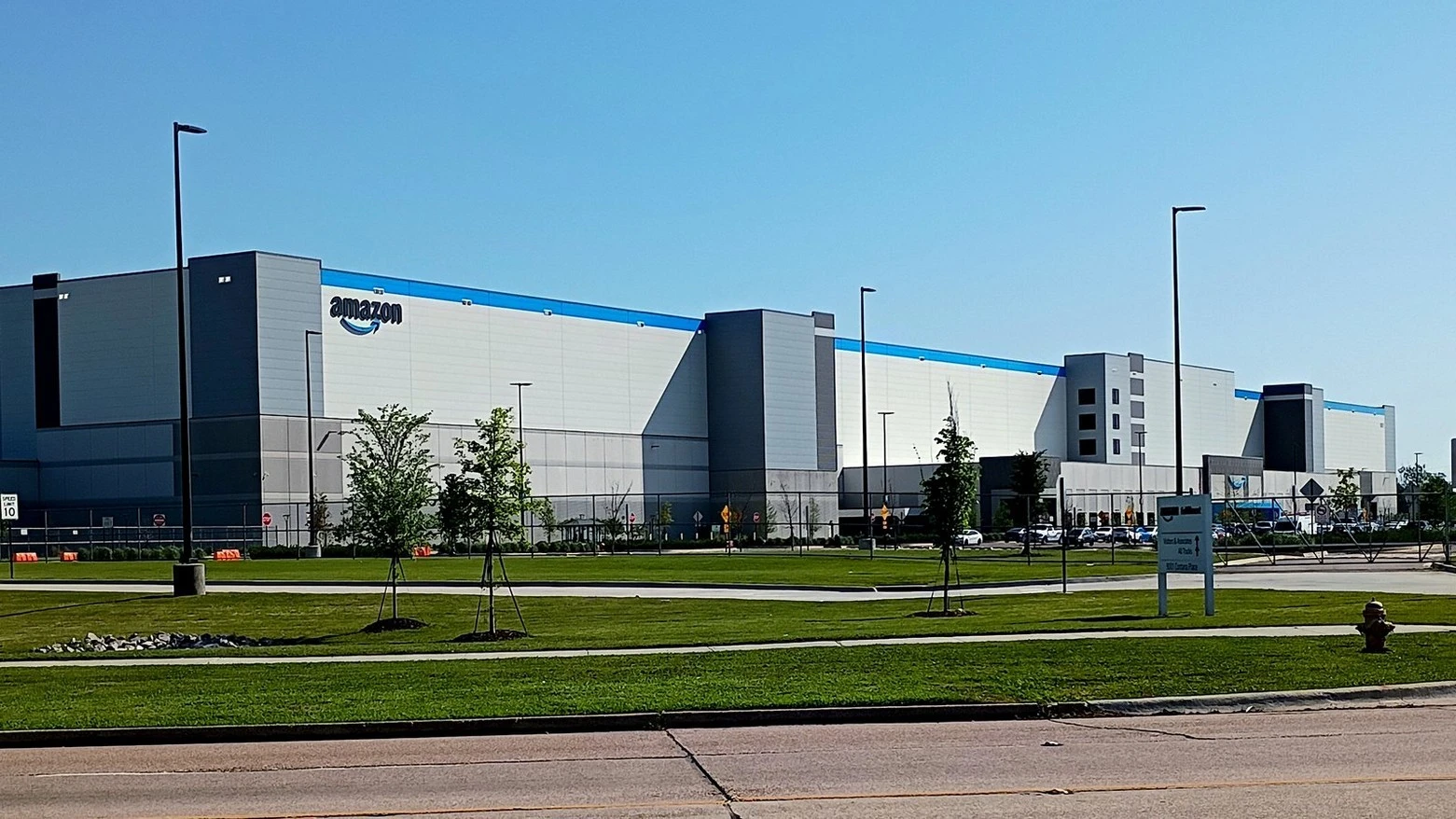
The appeal starts with high occupancy and modern buildings. LXP's largest tenant is Amazon, which occupies 6.7% of the portfolio, and its top 10 tenants account for roughly a third of occupancy, so no single move-out changes the story.
LXP was also still growing. In the second quarter it reported $49.5 million in funds from operations, up 5% from a year earlier, sold one property for $51 million, bought a 37-acre infill covered land site in Phoenix for $103.2 million and started two speculative developments in Columbus, Ohio.
CPP Investments' head of real estate, Sophie van Oosterom, pointed to the portfolio's strong occupancy and exposure to key distribution markets as the reason the firm expects attractive long-term returns.
The market backdrop: the oversupply is being absorbed
The timing makes sense when you look at the fundamentals. Developers delivered a wave of new warehouses during the pandemic e-commerce boom, and vacancy rose as that space hit the market. Cushman & Wakefield's third-quarter report, as cited by Bisnow, shows the tide turning: absorption ran at its strongest pace since the start of 2023 and national industrial vacancy fell to 6.8%, its lowest level since the end of 2024.
LXP is not an isolated bet. In Southern California, two portfolio sales this year have topped $3 billion combined, Bisnow reported on Tuesday: BKM Capital Partners and Kayne Anderson Real Estate's $1.8 billion purchase of a Blackstone-owned light industrial portfolio, and Rexford Industrial Realty's $1.2 billion sale to EQT Real Estate. CBRE brokers said more large portfolio trades are in the pipeline.
Public versus private pricing
Take-privates like this one happen when private buyers believe a REIT's share price undervalues its real estate. Here, a 12.3% premium over the recent trading price was enough to get the deal done, which tells us public investors had been pricing this portfolio more cautiously than private capital was willing to. When that gap exists, well-capitalized private funds step in.
What it means for CRE investors and owners
First, institutional demand for industrial is real and deep. When two of the largest investors in the world write a $5.2 billion check for bulk distribution space in the Midwest and Sun Belt, it supports valuations for comparable buildings in those markets, from Columbus to Phoenix.
Second, owners of modern, well-leased warehouses have options. Portfolio buyers are paying for scale, and a sale to a fund or a recapitalization with institutional equity is a realistic exit for owners who have been waiting out the oversupply cycle.
Third, watch the lease roll. Institutional buyers underwrite the gap between in-place rents and today's market rents. Owners with leases expiring in the next few years should model that carefully, in either direction, because the next buyer certainly will.
Finally, watch the gap between public and private values. If listed industrial REITs keep trading below what private capital will pay, expect more take-privates.
Sources
Bisnow, "Brookfield, CPP Complete $5.2B REIT Buyout, Pick Up U.S. Logistics Assets" (Nov. 2, 2026)
Bisnow, "Big Money Bets On SoCal Industrial As 2 Portfolio Sales Top $3B" (Nov. 3, 2026)
Published by The Basis. Research dates, source references and illustrative assumptions are retained from the original article.