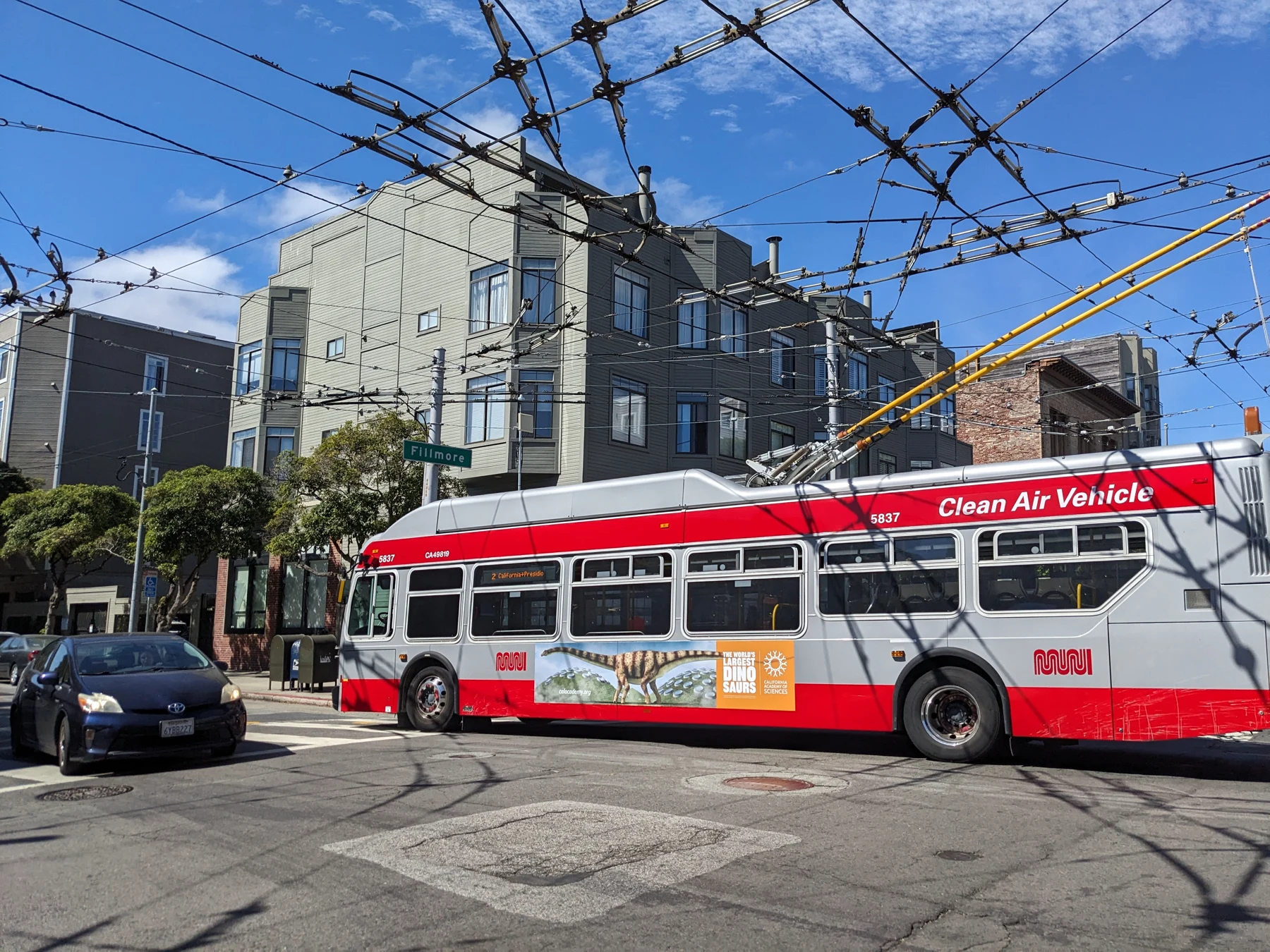
San Francisco property owners face a new budgeting consideration after Proposition H, a parcel tax supporting Muni operations, opened a wide lead in preliminary election returns.
KQED’s November 3 results update showed 72.4% voting yes, with 126,168 supporters and 47,995 opponents. The count was unofficial. The measure needs a simple majority.
Unlike a transfer tax triggered by a sale, Proposition H creates a recurring annual expense. The city’s official ballot description says the levy would raise an estimated $177 million annually for 15 years, with charges based on property type and size and adjusted for inflation.
The legal text sets the tax period from July 1, 2027, through June 30, 2042. For nonresidential parcels, the initial charge is $799 for buildings of 5,000 square feet or less. Larger buildings face additional charges under a graduated square-footage formula, with a maximum tax of $400,000.
Multifamily property follows a different schedule: $249 for buildings of up to 5,000 square feet, then an additional 19.5 cents for each square foot above that threshold, capped at $50,000. Mixed-use properties have their own calculation. Those differences mean owners cannot apply a single citywide per-square-foot assumption across a portfolio.
For example, applying the initial nonresidential schedule to an otherwise fully taxable 100,000-square-foot parcel produces an annual charge of $76,999: the $799 base, $34,200 on the next 45,000 square feet and $42,000 on the next 50,000. That is an illustrative calculation, not a tax assessment for a particular building.
The direct CRE implication is an additional operating expense to evaluate in acquisition underwriting, annual budgets and lease reviews. Whether an owner can recover any of the charge from a commercial tenant depends on the lease and applicable rules; the election result does not answer that question for every property.
The revenue’s purpose also matters to real estate: it is intended to support the transit network serving workplaces, shops and residents. However, the vote should not be treated as evidence that office occupancy, retail sales or asset values will increase. Those outcomes require separate market evidence.
With the measure well ahead, the next steps for owners are to confirm parcel classification and taxable area, identify applicable exemptions and review how the charge fits within operating expenses. Certification and implementation will turn the election outcome into a more concrete budgeting obligation.
Sources
KQED San Francisco election results
Official Proposition H ballot description
Official voter pamphlet and Section 1805 tax schedule
Published by The Basis. Research dates, source references and illustrative assumptions are retained from the original article.