
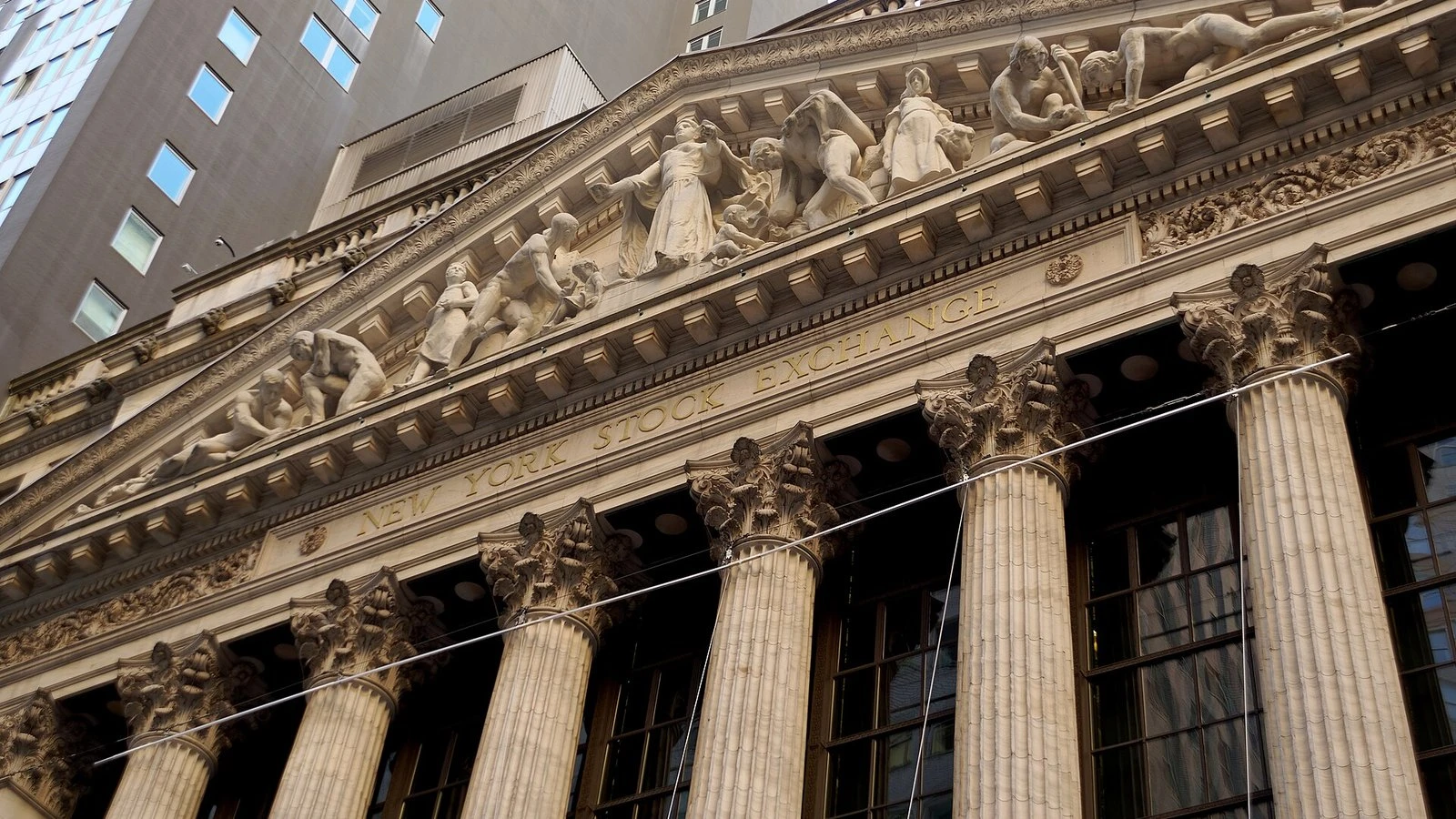
Wall Street spent Tuesday night bracing for a Democratic sweep. By Wednesday afternoon it was celebrating one. The Dow posted its best day in more than a year and a half, oil fell hard and Treasury yields eased. For commercial real estate, the bond market is the part of that story worth reading twice.
The numbers from Wednesday's session
CNBC reported that the Dow Jones Industrial Average jumped 1,570.47 points, or 3%, moving back above 53,000 for the first time since September 8 and posting its best day since April 9, 2025. The S&P 500 gained 1.6% and the Nasdaq Composite rose 1.4% at the time of that report. Overnight, futures had pointed sharply lower before results firmed up and President Trump said he would accept them.
Oil did a lot of the work. U.S. crude fell about 8% to roughly $88 a barrel and Brent dropped to about $94, according to CNBC, after Vice President JD Vance blamed the war with Iran for Republican losses. Traders read that as a sign the administration may feel more pressure to wind the conflict down.
What the bond market did
The 10-year Treasury yield fell more than 5 basis points to about 4.898%, per CNBC, while the 2-year dropped to roughly 4.573% and the 30-year to about 5.293%. Dow Jones Newswires, via Morningstar, put the 10-year at 4.888% later in the day, down from 4.951% at Tuesday's close, with the 2-year at a two-month low of 4.546%.
Two forces pushed yields down. The first was fiscal: a divided Congress makes new deficit spending harder. JPMorgan's trading desk flagged "reduced deficit spending" as a key post-election theme. The second was inflation expectations. Derivatives were pricing one-year-ahead inflation at about 2.1%, down from 2.4% on Tuesday and 2.7% at the end of last week, according to LSEG data cited by Dow Jones. Treasury also kept auction sizes unchanged in its quarterly refunding plan, which eased fears of a supply glut.
Not everyone thinks the relief will last. Andrew Jackson of Vontobel cautioned that "blocking new spending is not the same as reducing the existing deficit," and argued that heavy issuance could limit how far long-term yields fall.
The Fed hasn't changed its tune
The rally lands one week after the Federal Reserve held its benchmark rate at 3.75% to 4.00% in a 10 to 2 vote. The two dissenters, Lisa Cook and Beth Hammack, wanted a quarter-point hike, not a cut. The October 28 statement said plainly that "inflation remains elevated."
Markets still lean toward tightening. Cushman & Wakefield noted Wednesday that fed funds futures put an 83% probability on a 25 basis point hike in December. The firm also pointed out that the 10-year averaged 5.13% in October, its highest monthly average since 2002. Wednesday's 4.89% is a relief from that peak, not a return to cheap money.
The near-term calendar is packed. ADP reported 86,000 private jobs added in October. The government's payroll report is due Friday, with economists polled by The Wall Street Journal expecting 59,000, and the October consumer price index arrives next week.
Where real estate stands
Public real estate has been moving with rates all year. Cushman & Wakefield says the REIT index was up 11.7% year to date through October, but fell 6.4% between June and September as Treasury yields climbed. Borrowing costs on the residential side tell a similar story: Freddie Mac's survey put the average 30-year fixed mortgage at 7.24% as of October 29, down from 7.32% a week earlier but well above the 6.17% of a year ago.
What it means for CRE investors and owners
Lock in what the market gives you. A 6 to 10 basis point drop in the 10-year is small, but on a large floating-to-fixed conversion or a refinance it is real money. Borrowers with loans pricing off Treasuries should talk to lenders this week rather than wait to see whether Friday's jobs report or next week's CPI erases the move.
Underwrite flat rates, not falling ones. With the Fed's dissenters arguing for hikes and futures pricing a December increase, a base case of meaningful rate cuts in 2027 is a hope, not a plan. Cushman & Wakefield's own forecast keeps the 10-year between 4.5% and 5.0% through 2027.
Watch oil as an interest rate input. Wednesday showed how quickly energy prices feed through to inflation expectations and then to yields. A ceasefire would help cap rates by way of the bond market; a renewed spike would do the opposite.
Remember who rallied. Investors rotated into economically sensitive names like Walmart and Bank of America, while some AI infrastructure stocks fell. That split matters for data center owners and developers, a theme we take up separately today.
Sources
CNBC, Stock market news for Nov. 4, 2026: https://www.cnbc.com/2026/11/03/stock-market-today-live-updates.html
CNBC, Treasury yields fall as Democrats win big: https://www.cnbc.com/2026/11/03/treasury-yields-fall-as-democrats-win-big-in-us-midterm-elections.html
Morningstar / Dow Jones Newswires, Treasury yields down following Democrats' midterm win: https://www.morningstar.com/news/dow-jones/2026110412325/treasury-yields-down-following-democrats-midterm-win-3rd-update
Federal Reserve, FOMC statement, October 28, 2026: https://www.federalreserve.gov/newsevents/pressreleases/monetary20261028a.htm
Cushman & Wakefield, U.S. Midterms 2026: Policy Impact on CRE: https://www.cushmanwakefield.com/en/united-states/insights/midterms-2026
Freddie Mac, Primary Mortgage Market Survey: https://www.freddiemac.com/pmms
Published by The Basis. Research dates, source references and illustrative assumptions are retained from the original article.